Beit Shemesh or Ramat Beit Shemesh — What Is Actually the Difference
Updated August 2026 · by DIRA Real Estate · 7 min read
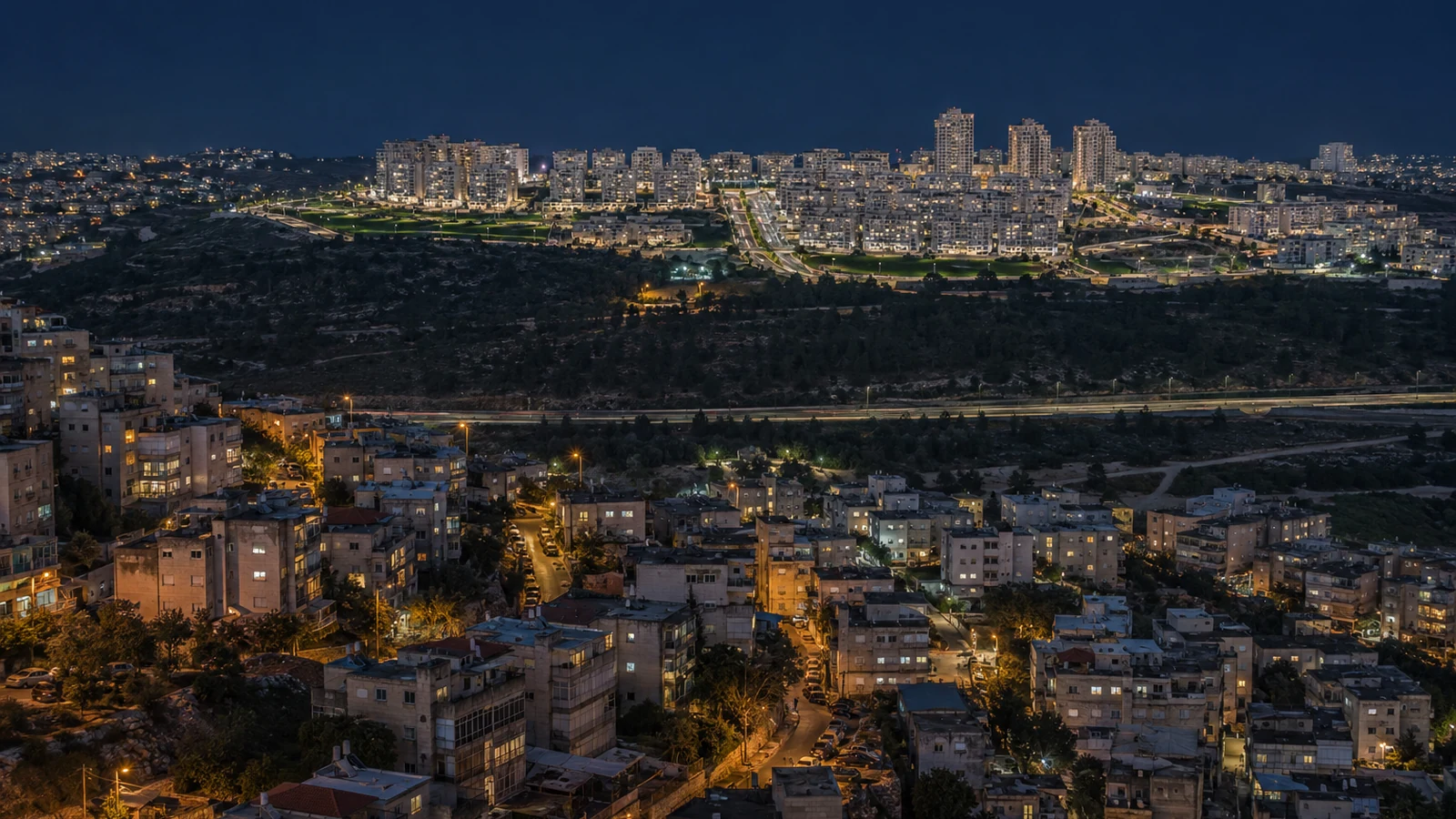
The short answerIs Ramat Beit Shemesh a separate city?
No. Ramat Beit Shemesh is not a city, not a local council and not an independent authority — it is an umbrella name for an area of neighborhoods inside the city of Beit Shemesh. Someone living in Ramah Gimmel and someone living in Givat Sharet pay arnona to the same municipality and vote for the same city council. In the land registry, in a contract and in every official document, the address is Beit Shemesh.
The confusion arises because in everyday speech — and in property listings — the two names are used as if they were two places. People say "we live in Beit Shemesh" meaning the old city, and "we are in Ramat Beit Shemesh" meaning the Ramot. Both sentences are correct, and both describe the same city.
The historyWhy are there two names at all?
Because of a gap of nearly half a century between the two halves of the city. Beit Shemesh was founded on 6 December 1950 as a ma'abara absorbing new immigrants, and was declared a city only on 25 June 1991 — meaning that for forty years it was a relatively small town. In 1997 construction began on Ramat Beit Shemesh, on land annexed to the city from the Mateh Yehuda Regional Council during the first half of the 1990s. The new part was built on the ridge south of the old city, and grew until it became the larger half.
The pace continues today. According to Israel's Central Bureau of Statistics, Beit Shemesh had 176,786 residents at the end of 2024, and estimates for mid-2026 place it around 192,000 — some 15,000 additional residents in a year and a half. Almost all of that growth sits in the newer Ramot, not in the old city.
The differencesWhat is actually different between the two halves?
The one substantive difference is the year of construction — everything else follows from it. An area built in the 1950s and 1970s looks different from one built from 1997 onward, not because of taste but because of building standards, plot sizes and traffic planning.
| In what | Old Beit Shemesh | Ramat Beit Shemesh |
|---|---|---|
| Build era | From the 1950s onward | From 1997 onward |
| Typical construction | Older low-rise blocks, some without a lift | Newer construction with lift and parking, and towers in Neve Shamir |
| Planning | Older fabric that developed in stages | Pre-planned neighborhoods, parks and commercial centres |
| Population | Mixed and diverse — veterans, olim, religious and secular | Largely religious and Haredi, alongside mixed and Anglo neighborhoods |
| Entry price | Generally lower | Generally higher, and varies widely between Ramot |
| The railway station | Sits on the old-city side | A short drive to the station |
| Urban renewal | Pinui-binui and TAMA — the main upside | Barely relevant, the stock is new |
Both halves share the same access infrastructure: Route 38 is the main artery into the city, widened to a dual carriageway by 2019, and linked to Highway 6 via the Sha'ar HaGai interchange. Beit Shemesh railway station reopened in 2003 and connects the city to the national network.
The mapWhich neighborhoods belong to each side?
On the old side you will find, among others, Givat Sharet, Sheinfeld and Nofei Aviv — the areas built before Ramat Beit Shemesh existed. On the new side, "Ramat Beit Shemesh" is divided into Ramot lettered in sequence, each of which also carries an official name that most residents barely use.
| The spoken name | The official name | Note |
|---|---|---|
| Ramah Aleph | Ramat Nechalim | The oldest of the Ramot |
| Ramah Bet | Ramat HaTannaim | Central and established |
| Ramah Gimmel | Ramat HaNeviim | Split into Gimmel 1 and Gimmel 2 |
| Ramah Daled | Ramat HaAmoraim | The largest and fastest-growing, split into five sub-areas |
| Ramah Heh | Neve Shamir | The newest, with towers — here the official name is the one people use |
| Ramah Vav | In planning | Not yet built |
Alongside the lettered Ramot the area also holds neighborhoods with names of their own: Ramat Avraham, Mishkafayim and M3. They are part of the same new area but carry no letter — and anyone searching by letters alone can miss them entirely.
In practiceWhat does it mean when you are apartment hunting?
It means the words "Beit Shemesh" in a listing headline tell you almost nothing. The same listing can describe a three-room flat in an older block in Givat Sharet, or a five-room apartment with a lift and parking in Ramah Daled — two entirely different products, in the same city, under the same name. This is something we see repeatedly with buyers searching from a distance: they filter by city name, and the gap only surfaces at the viewing.
The practical conclusion is simple: do not filter by "Beit Shemesh" versus "Ramat Beit Shemesh", filter by neighborhood. Once you know which side of the city you are looking at, the next question is which neighborhood within it — and that is a question of community and lifestyle. The neighborhood guide covers each one and who lives there, the price guide gives the current ranges, and the Old City page gathers what is worth knowing about the veteran side.
FAQBeit Shemesh vs Ramat Beit Shemesh
Is Ramat Beit Shemesh a separate city from Beit Shemesh?
When was Ramat Beit Shemesh built?
Which neighborhoods count as Old Beit Shemesh?
What are the official names of Ramah Aleph through Ramah Heh?
Where are apartments cheaper — the old city or the Ramot?
Sources: founding dates, the declaration of city status, the 1997 land annexation, the division of the Ramot and their official names, Route 38 and the railway station — the Beit Shemesh and Ramat Beit Shemesh entries on Wikipedia. Population figures — Israel's Central Bureau of Statistics: 176,786 residents at the end of 2024, and a mid-2026 estimate of around 192,000. The description of what only surfaces for buyers at the viewing is DIRA's own observation from the ground, not a statistic. All information here is general and indicative.