Buying in Beit Shemesh from Abroad — Why the Community Changes Street by Street
Updated July 2026 · by DIRA Real Estate · 7 min read
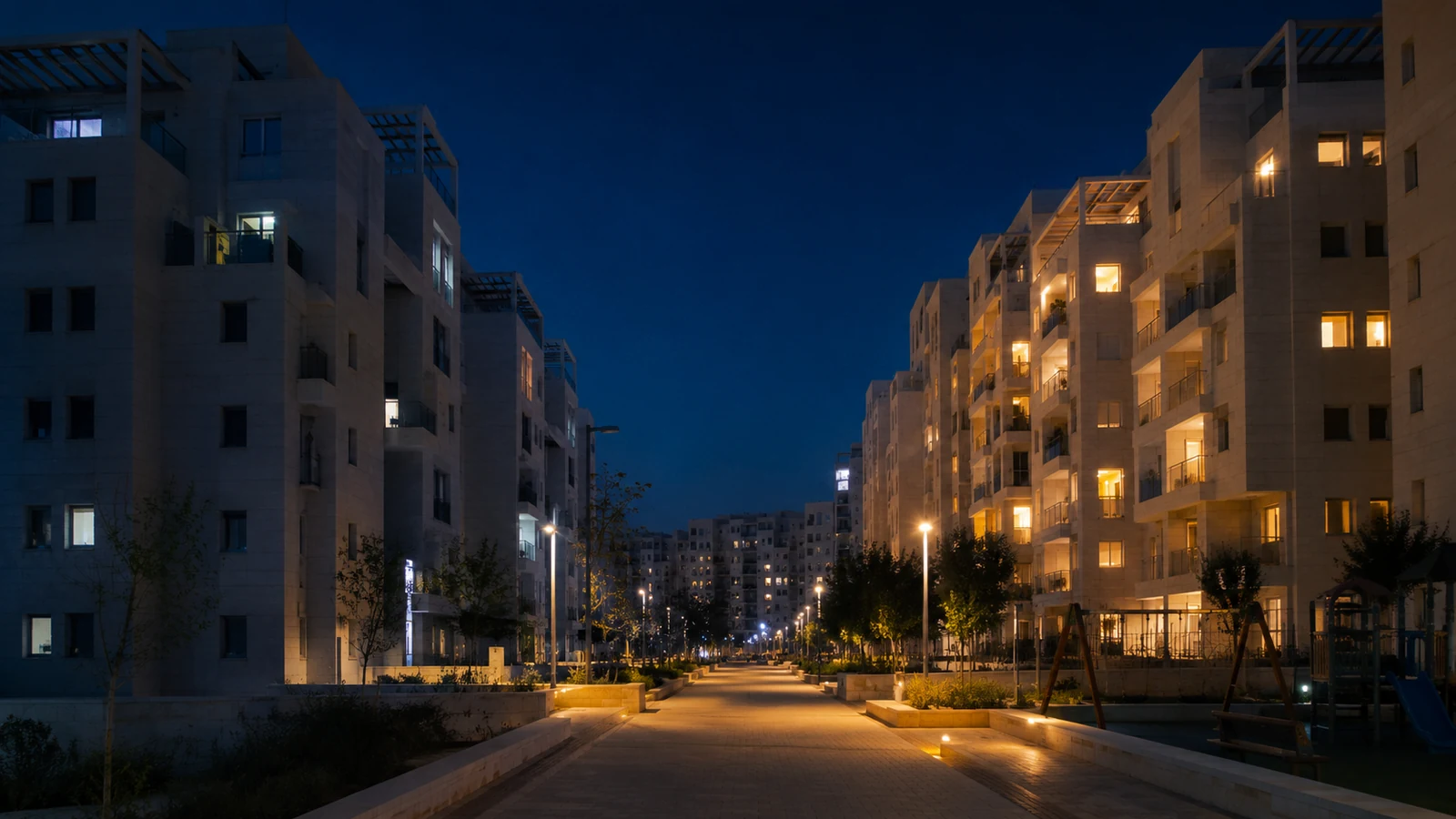
The surpriseThe map does not tell the story
A family searching from abroad almost always works in the same order: map first, price second, community last. In Beit Shemesh that order works against you. Nefesh B'Nefesh put it sharply in their community guide: in Ramat Beit Shemesh each neighborhood — and at times specific streets and buildings — carries a hashkafic orientation that is not shared by the adjacent neighborhood, street or building.
The practical meaning is simple and uncomfortable: two apartments a three-minute walk apart, in the same price bracket and the same neighborhood on paper, can lead to two entirely different daily lives — a different shul, a different school, different neighbours and a different language in the courtyard. In an online listing those two apartments look like twins.
Why it happenedWhole communities that moved together
This mosaic was not an accident, and it was not urban planning either. It is a product of how Beit Shemesh grew. In the 1990s the city absorbed a large wave of immigration — from the former Soviet Union, from Ethiopia and from English-speaking countries — and became a major centre for olim from the English-speaking world, chiefly North America, the UK, South Africa and Australia. At the end of that decade construction began on Ramat Beit Shemesh, which doubled the size of the city.
And here is the part we see on the ground, one that barely appears in any guide: it was not only individual families that came to Beit Shemesh. Entire communities arrived — groups that knew one another before making aliyah, that came within a short span of time, and that simply carried on their communal life in the new place. The same nusach, the same educational style, the same social norms, just at a different address. When such a group settles on one street or across a few adjacent buildings, it gives that spot a distinct character — while the street opposite, built in the same year and in the same style, takes on a completely different character from a different group.
This is why the boundaries in Beit Shemesh are communal rather than geographic. They do not follow roads, construction years or price brackets — they follow who arrived here, when, and with whom.
Where you see itTraces of the waves on the map
You can see the pattern in the names of specific pockets, not only whole neighborhoods. The Revivim area in Ramah Aleph is mostly populated by Haredim of Anglo descent. Ramat Shilo, built in 2007, holds a large community of English-speaking olim. And in Ramah Gimmel, the Gimmel 1 and Gimmel 2 areas have become particularly appealing to the Anglo public. These are not three random points on a map — they are three different waves that landed in three different places.
| What you see from afar | What actually decides |
|---|---|
| The neighborhood name | The specific street and building inside it |
| Distance in kilometres | Which shul you walk to |
| Price per sqm | Which school the children join, and with whom |
| Build year and standard | Which community settled there, and when |
What to doHow to check a community remotely
The conclusion is not that you cannot buy remotely — families do it every year and do it well. The conclusion is that the order of checking has to be reversed. Instead of filtering by price and area and then checking the community, you start from the community and only then look at what is available in it within budget.
In practice that means four questions about the specific property, not about the neighborhood: which shul do people walk to from this address on Shabbat? Which school are the children in this building registered at? Where did most of the neighbours in the building come from, and in which decade? And what language is spoken in the courtyard in the afternoon? Those four answers are worth more than any photo and any title deed.
And if you are at the start of the process, begin with the wide picture: the full neighborhood guide explains the character of each area and who it suits, and the price guide gives the current ranges. From there you can go down to street level.
FAQBuying in Beit Shemesh from abroad
Why does community character change between adjacent streets in Beit Shemesh?
Can you choose an apartment in Beit Shemesh without coming to Israel?
Which countries do the English-speaking families in Beit Shemesh come from?
How large is Beit Shemesh today?
Sources: population figures — Israel Central Bureau of Statistics (2024). Background on the immigration waves, the development of Ramat Beit Shemesh and the Revivim, Ramat Shilo and Ramah Gimmel pockets — the Beit Shemesh entry on Wikipedia. The statement on hashkafic orientation at neighborhood, street and building level — the Nefesh B'Nefesh community guide. The description of communities arriving together and continuing their communal life is DIRA's own observation from the ground, not a statistic. Community character changes over time — all information here is general and indicative.